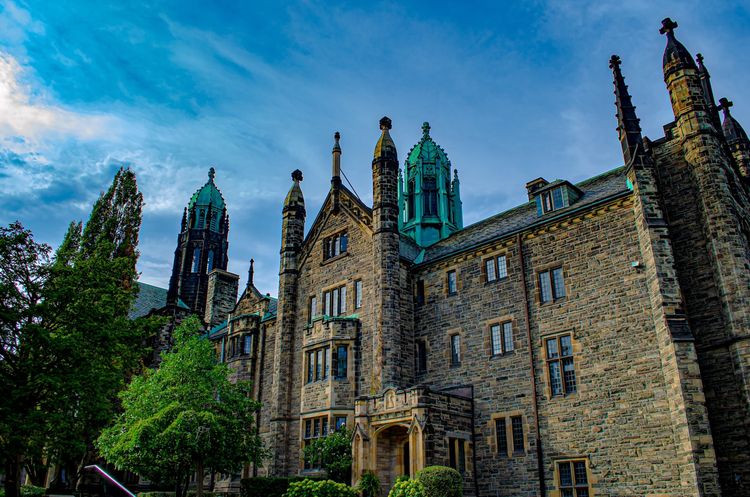
A few months back I was invited to SZABIST to speak to a class of BS seniors. The outline of my talk was “The things I wish I knew when I was in SZABIST” and before I went into the class room I had the opportunity to catch up with Zeeshan sb, the coordinator of the BS program.
Over the last couple of years, he has led a complete overhaul of the BS curriculum. Most of the amateur tool-oriented courses have been thrown out, and have been replaced by courses in math and social sciences. The class I spoke to was studying the Philosophy of Science, and a glance at the course outline made me want to want to be a student again. So the good news is that SZABIST has not been at a standstill over the last couple of years. If the BS program is representative of SZABIST, then the curriculum has been improved and key faculty (like zeeshan sb) has been retained. But there are deeper issues lurking.
For me, one important issue is the chancellor of SZABIST. A chancellor in the Pakistani system is the titular head of a university. It is a ceremonial role, and in principle is drawn from the top cadre of government, political or business leaders. The chancellor of GIK, PIEAS and LUMS is the President of Pakistan (whoever that might be). It’s simple, apolitical and uncontroversial. The chancellor of SZABIST is Asif Ali Zardari’s sister. My question is: How was she chosen?
Is there a fair process to select the chancellor? And if there is, then how was the unaccomplished sister of an unaccomplished leader chosen as the chancellor? I’m not alluding to any corruption here. There is no money at stake. I’m sure the finances of SZABIST are quite modest and transparent. Furthermore, the chancellor has very little to do with operations, so the position is not exactly lucrative. But what message does it convey to the students and the academic community? That Pakistan’s leading SciTech institute is a family toy with wilful appointments to prove the point?
In my opinion, if SZABIST wants to become a great institute then it must be neutral to politics and it must make appointments on merit, not family connections. Universities in the US often lean left or right (mostly left). But that’s based on reasoned analysis of individual faculty, not cult politics.
From my days in SZABIST, I don’t recall any overtly political themes. While there were occasional effusive lectures on ZAB, and a book extolling his tenure, for the most part, Dr. Leghari made sure that academics and politics were kept in separate realms. And while one might disagree with the politics of Benazir Bhutto, her credentials as a thinker, an author and a leader are beyond reproach. As the founder and the chancellor of SZABIST she sent the right message. But does Dr. Azra Peechoho?
Maybe this is a non-issue, and I sure hope that it is, but the political subtext of SZABIST has always made me uneasy. Ideologies and political parties come and go. The true measure of a great institute is if it welcomes diversity, champions academic freedom, confronts ethnic biases, fights for equality, and keeps the pursuit of knowledge supreme. If it pursues these ideals, it attracts the smartest students and faculty in the world. If it pursues a policy of partiality, becoming victim to politics and ethnic affiliations, then it loses a lot of things, but the most valuable thing it loses is purpose.
Under Dr. Leghari SZABIST has gained the traction, the stature and the resources to take it to the next phase of growth. The coming few years represent a grand opportunity to transform SZABIST into the great institute that it was destined to become but does the Board have the maturity and the vision to take it there? Will SZABIST realize the vision of its founder or squander it through immature family appointments? We will know in 5 years, but until then, I would recommend my cousin to try for IBA and LUMS first. SZABIST is a distant third.
-Adnan